Reading time: 10 minutes | Updated: April 2026 | Written by: Joseph Paradza – Experienced Occupational Therapist
If you or someone you support has recently received an NDIS plan — or is preparing for a plan review — there’s a good chance you’ve heard the term Functional Capacity Assessment. It’s one of the most important documents in the NDIS ecosystem, yet many participants and families aren’t sure what it actually involves, how to prepare for it, or why it matters so much.
This guide explains everything: what a Functional Capacity Assessment is, what the process looks like, which areas get assessed, and how the resulting report is used to support your NDIS funding.
In this article
- What is a Functional Capacity Assessment?
- Why is an FCA important for the NDIS?
- Who conducts an FCA?
- What areas does an FCA cover?
- How is an FCA conducted?
- What does the FCA report include?
- How much funding do I need?
- How often should I have an FCA?
- Tips for getting the most from your FCA
- Frequently asked questions
What Is a Functional Capacity Assessment?
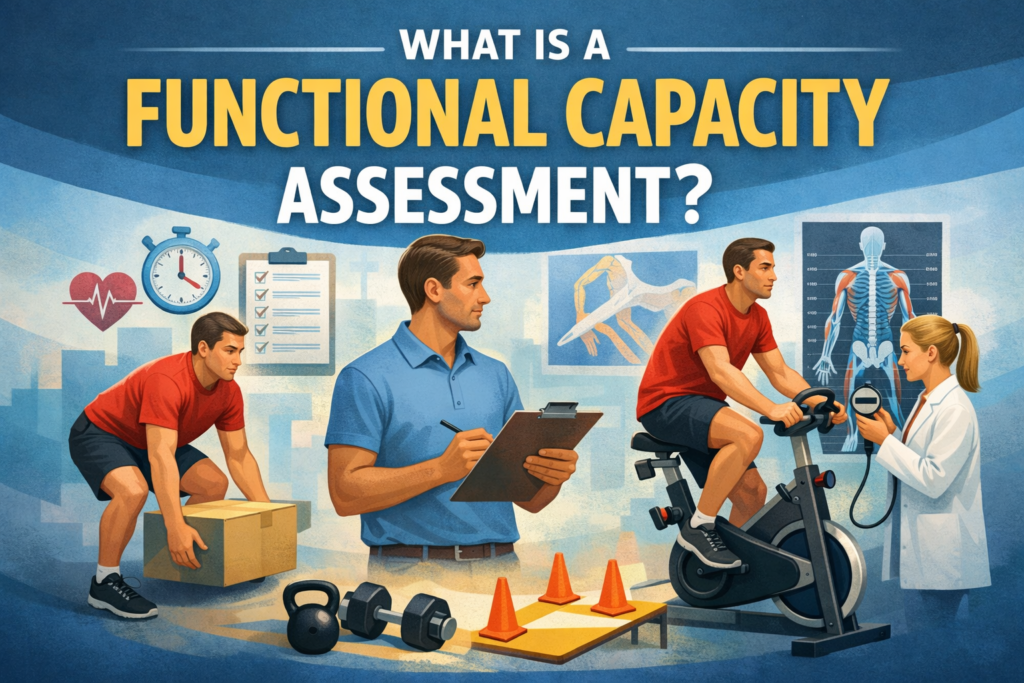
A Functional Capacity Assessment (FCA) — sometimes called a Functional Capability Assessment — is a comprehensive evaluation conducted by a qualified occupational therapist (OT) that measures a person’s ability to perform everyday tasks and activities. It examines how a disability, injury, or health condition affects daily functioning across multiple areas of life, including self-care, mobility, cognition, communication, and community participation.
For NDIS participants, an FCA is one of the most powerful pieces of clinical evidence available. It gives the National Disability Insurance Agency (NDIA) a clear, evidence-based picture of your real-world support needs — and it forms the foundation for many of the most important funding decisions in your NDIS plan.
Key distinction: Unlike a medical diagnosis, which tells the NDIA what condition you have, an FCA tells them how that condition affects your daily life in practical terms. That is the difference that matters when it comes to unlocking funding.
Why Is an FCA So Important for the NDIS?
The NDIS funds supports based on your individual needs, goals, and what is “reasonable and necessary” for your situation. To determine this, the NDIA requires clinical evidence — and an FCA provides exactly that.
A well-written Functional Capacity Assessment can:
- Support initial NDIS access by demonstrating the functional impact of your disability
- Justify higher funding for personal care, community access, or therapy supports
- Strengthen a plan review by providing up-to-date evidence of your support needs
- Unlock assistive technology (AT) funding — such as wheelchairs, communication devices, or daily living aids
- Support a home modification application by documenting access barriers in your current environment
- Back a Supported Independent Living (SIL) or Specialist Disability Accommodation (SDA) application with the clinical evidence the NDIA requires
In short: if your current NDIS plan does not reflect your actual needs, a Functional Capacity Assessment is often the most effective step you can take to address that.
Who Conducts a Functional Capacity Assessment?
An FCA must be completed by a qualified allied health professional — most commonly an occupational therapist (OT). OTs are specifically trained in assessing a person’s ability to perform daily activities, making them ideally suited for this type of evaluation.
In some cases, physiotherapists may also conduct FCAs, particularly when the assessment focuses on physical mobility and movement. For participants with complex or multiple conditions, the FCA may draw on input from a multidisciplinary team.
For your FCA to be accepted by the NDIA, your OT must:
- Hold current AHPRA registration
- Be an NDIS registered provider if you are agency-managed (or an unregistered provider if you are plan-managed or self-managed)
- Have relevant experience working with your disability or condition type
At TEAH: Our occupational therapists are AHPRA-registered, NDIS-registered, and experienced across physical, cognitive, and psychosocial disabilities. We conduct FCAs in your home, school, workplace, or community setting — wherever gives us the most accurate picture of your daily functioning. Learn more about our OT services →
What Areas Does a Functional Capacity Assessment Cover?
An FCA is not a single test — it is a structured evaluation across multiple life domains. While the exact scope varies depending on your individual circumstances and NDIS goals, most FCAs cover the following areas:
1. Personal Care and Self-Care
This includes your ability to independently manage tasks like showering, dressing, grooming, toileting, eating, and medication management. The OT will observe or discuss how you perform these tasks, how long they take, and what level of assistance you currently require.
2. Domestic and Household Tasks
Activities such as cooking, meal preparation, cleaning, laundry, shopping, and managing household finances fall under this domain. The OT will assess whether you can perform these tasks safely and independently, or whether you need support to do so.
3. Mobility and Physical Function
This covers how you move around your home and community — walking, transferring between surfaces (such as bed to wheelchair), navigating stairs, and using mobility aids. If you use or may need assistive technology, this section often forms the clinical basis for an AT prescription.
4. Cognitive Function
The OT assesses your memory, attention, problem-solving, planning, and decision-making abilities. This is particularly relevant for participants with acquired brain injury, intellectual disability, dementia, or mental health conditions that affect day-to-day cognition.
5. Communication and Social Interaction
This includes your ability to understand and express yourself — verbally or through augmentative and alternative communication (AAC) — as well as your capacity to engage in social situations and maintain relationships with others.
6. Community Access and Participation
The OT will look at your ability to use public transport, attend appointments, engage in community activities, and participate in employment or education. Physical, sensory, cognitive, and social barriers to participation are each documented and considered.
7. Health and Wellbeing
Sleep, nutrition, pain management, and your ability to manage your own health needs may also be included — particularly where these directly affect your daily functioning and support requirements.
8. Carer and Support Network
The FCA also considers the informal support you currently receive from family, friends, or support workers — and whether that level of informal support is sustainable over the long term. This is an important factor in determining what formal NDIS support is reasonable and necessary.
How Is a Functional Capacity Assessment Conducted?
The FCA process unfolds across three phases:
Phase 1: Pre-Assessment Preparation
Before your appointment, your OT may ask you to share existing reports — such as medical letters, specialist reports, or previous NDIS assessments — along with therapy notes and any goals from your current NDIS plan. This helps the OT understand your history and tailor the assessment to what matters most for your situation.
Phase 2: The Assessment Appointment
The assessment itself is most commonly conducted in your home. Seeing you in your actual environment gives the OT far more clinically useful information than a clinic room would. The appointment typically includes:
- A structured interview with you (and your carer or family member, if appropriate)
- Direct observation of you performing relevant daily tasks
- Standardised assessment tools and outcome measures appropriate to your disability (such as the WHODAS-2, Vineland-3, or ABAS-3)
- Discussion of your goals, current challenges, and what supports you feel you need
How long does the appointment take? Most FCA appointments take between 1.5 and 4 hours, depending on the complexity of your needs. Some complex FCAs may be split across two appointments to avoid fatigue.
Phase 3: Report Writing and Delivery
After the assessment, your OT writes a detailed clinical report. A thorough FCA report can run to 20 or more pages, and typically takes 10 to 14 business days to complete after the appointment.
You will receive a copy of the report to review before it is submitted, so you can confirm it accurately reflects your abilities, challenges, and daily support needs. If anything seems incorrect or has been missed, raise it with your OT before the report is finalised.
What Does an FCA Report Include?
A comprehensive Functional Capacity Assessment report will typically contain:
- Background information — your diagnosis, relevant medical history, and current supports in place
- Assessment methodology — the tools and measures used, and who was present during the assessment
- Findings across each domain — a detailed account of your functional abilities and limitations in each area of daily life
- Recommendations — specific supports, therapy, assistive technology, or home modifications that would address the identified needs
- Hours of support — in many FCAs, particularly those supporting SIL applications, the OT estimates the number of hours of support per day or week that are clinically justified
- Goal alignment — how the recommended supports connect directly to your stated NDIS goals
Quality matters enormously. A vague or poorly structured FCA can result in your funding being underestimated — sometimes significantly. An evidence-based, goal-aligned report written by an experienced OT is one of your strongest tools in the NDIS planning process.
How Much NDIS Funding Do I Need for an FCA?
Under the NDIS Pricing Arrangements (2025–26), occupational therapy is billed at $193.99 per hour on weekdays. A standard FCA — including the assessment appointment and the report — typically requires between 8 and 12 hours of OT time, depending on complexity.
This means you should expect your FCA to draw approximately $1,500 to $2,500 from your Capacity Building — Improved Daily Living budget. If your FCA is specifically to support an assistive technology or home modification application, the assessment cost may be claimable from your Capital Supports budget instead.
| FCA type | Typical OT hours | Estimated cost | Budget line |
|---|---|---|---|
| Standard FCA | 8–10 hrs | $1,550–$1,940 | CB — Improved Daily Living |
| Complex FCA (SIL/SDA) | 10–14 hrs | $1,940–$2,720 | CB — Improved Daily Living |
| AT assessment & report | 3–6 hrs | $580–$1,160 | Capital — Assistive Technology |
| Home modification report | 2–4 hrs | $390–$780 | Capital — Home Modifications |
Rates based on NDIS Pricing Arrangements 2025–26. Rates are indicative. Weekend and public holiday rates are higher. Always confirm item numbers with your provider before proceeding.
How Often Should I Have a Functional Capacity Assessment?
There is no fixed rule, but FCAs are most commonly completed at the following points:
- At first NDIS access — to establish a baseline of your functional capacity when you first join the scheme
- Before a plan review — to provide updated clinical evidence if your needs have changed significantly
- After a major health event — such as a stroke, accident, surgery, or significant decline in function
- When applying for high-cost supports — such as SIL, SDA, a customised power wheelchair, or major home modifications
- When funding is being disputed or reduced — an updated FCA can provide the clinical evidence needed to support an internal review or AAT appeal
As a general guide, most OTs recommend revisiting your FCA every two to three years, or sooner if your circumstances have changed significantly.
Tips for Getting the Most from Your Functional Capacity Assessment
To ensure your FCA accurately captures the full picture of your support needs, keep these points in mind:
- Choose a typical day, not a good one. The OT needs to understand how you function on an average or difficult day — including the impact of pain, fatigue, anxiety, or other variable symptoms. Many people unintentionally perform better in a clinical setting than they do day-to-day. Be honest.
- Have your support network present if possible. A family member, carer, or support coordinator who knows you well can provide important additional context — particularly if you find it difficult to describe your own difficulties accurately.
- Bring any relevant documents. This includes specialist reports, therapy notes, medication lists, previous NDIS assessments, and a copy of your current plan goals. The more context your OT has, the more targeted and useful the assessment will be.
- Mention everything that affects your daily life. The OT can only report on what they observe or are told. If a difficulty feels minor, embarrassing, or unrelated — mention it anyway. Let the OT make the clinical call on whether it’s relevant.
- Read your draft report carefully. When you receive the draft, review it thoroughly. Make sure it accurately reflects your functioning on your typical or difficult days — not just your best performance during the appointment. You have the right to request corrections before it is submitted to the NDIA.
NDIS Registered Provider
Ready to book your FCA with TEAH?
Our local occupational therapists conduct in-home FCAs across Darwin (NT), Perth (WA), Brisbane (QLD), and Victoria — with low wait times and NDIA-quality reports.
Frequently Asked Questions
What is the difference between an FCA and an OT assessment?
An OT assessment is a broad term covering any evaluation conducted by an occupational therapist. An FCA is a specific, structured type of OT assessment designed to comprehensively evaluate your daily functional capacity across all life domains. Not all OT assessments are FCAs, but all FCAs are a type of OT assessment.
Who can request a Functional Capacity Assessment?
Anyone involved in an NDIS participant’s support network can initiate a referral — including the participant themselves, a family member, a support coordinator, a plan manager, or another allied health professional. No GP referral is required.
Does an FCA guarantee more NDIS funding?
Not automatically. An FCA provides evidence to support your funding request, but the NDIA makes the final decision on what is funded. A well-written, evidence-based FCA significantly strengthens your case — which is why choosing an experienced OT matters.
How long does a Functional Capacity Assessment take?
The assessment appointment typically takes between 1.5 and 4 hours depending on complexity. Report writing takes an additional 10–14 business days. Total OT time (assessment + report) is generally 8–12 hours.
How much does an NDIS FCA cost?
Under the NDIS Pricing Arrangements 2025–26, OT services are billed at $193.99 per hour on weekdays. A standard FCA requires 8–12 hours of OT time, so expect to draw approximately $1,500–$2,500 from your Capacity Building — Improved Daily Living budget.
Can an FCA be done via telehealth?
Some components — such as the initial interview and some cognitive assessments — can be conducted via telehealth. However, for a complete and clinically robust FCA, in-person observation in your home environment is strongly preferred and produces the most useful clinical evidence.
How quickly can I get an FCA appointment with TEAH?
TEAH’s wait times are consistently below the industry average. Availability varies by location. Contact our intake team on 1300 203 059 for current availability in your area.
Summary
A Functional Capacity Assessment is one of the most valuable pieces of clinical evidence available to NDIS participants. Conducted by an occupational therapist, it provides the NDIA with a detailed, objective picture of how your disability affects your daily life — and what supports you genuinely need to achieve your goals and live as independently as possible.
If your current NDIS plan doesn’t feel like it reflects your real needs, or you’re preparing for a plan review, an FCA is often the most effective next step. TEAH’s experienced local occupational therapists are ready to help — with low wait times, in-home assessments, and clinical reports that meet NDIA standards.
Request an FCA with TEAH
Serving Darwin (NT) · Perth (WA) · Brisbane (QLD) · Victoria
Related articles you may find useful
TEAH Allied Health Team
Top End Allied Health (TEAH) is an NDIS-registered allied health provider delivering occupational therapy, speech pathology, physiotherapy, and supported accommodation services across WA, NT, QLD, and Victoria. For referrals: referrals@topendalliedhealth.com.au | 1300 203 059